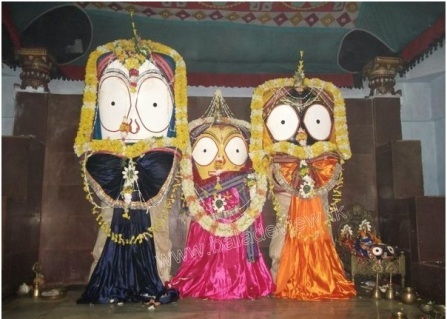
Tuesday, July 7, 2015

8. DAKSHINESWAR MAA KALI TEMPLE , KOLKATA

DAKSHINESWAR MAA KALI TEMPLE , KOLKATA, West Bengal.

Dakshineswar Kali Temple....

Dakshineswar Kali Temple is a Hindu temple located in Dakshineswar near Kolkata. Situated on the eastern bank of the Hooghly River, the presiding deity of the temple is Bhavatarini, an aspect of Kali, meaning, 'She who liberates Her devotees from the ocean of existence i.e. Samsara'. The temple was built by Rani Rashmoni, a philanthropist and a devotee of Kali in 1855. The temple is famous for its association with Ramakrishna, a mystic of 19th Century Bengal.

The temple compound, apart from the nine-spired main temple, contains a large courtyard surrounding the temple, with rooms along the boundary walls. There are twelve shrines dedicated to Shiva—Kali's companion—along the riverfront, a temple to Radha-Krishna, a bathing ghat on the river, a shrine dedicated to Rani Rashmoni. 'Nahavat-Khana', the chamber in the northwestern corner just beyond the last of the Shiva temples, is where Ramakrishna spent a considerable part of his life.

The Dakshineswar Kali Temple was founded around the middle of the 19th Century by Rani Rashmoni. Rani Rashmoni belonged to Kaivarta caste and was well known for her philanthropic activities. In the year 1847, Rashmoni, prepared to go upon a long pilgrimage to the sacred Hindu city of Kashi to express her devotions to the Divine Mother. Rani was to travel in twenty four boats, carrying relatives, servants and supplies. According to traditional accounts, the night before the pilgrimage began, Rashmoni had a vision of the Divine Mother, in the form of the goddess Kali in a dream and reportedly said,

“There is no need to go to Banaras. Install my statue in a beautiful temple on the banks of the Ganges river and arrange for my worship there. Then I shall manifest myself in the image and accept worship at that place. ”

Profoundly affected by the dream, Rani immediately looked for and purchased a 20-acred plot in the village of Dakshineswar. The large temple complex was built between 1847 and 1855. The 20-acre (81,000 m2) plot was bought from an Englishman, John Hastie and was then popularly known as Saheban Bagicha, partly old Muslim burial ground shaped like a tortoise, considered befitting for the worship of Shakti according to Tantra traditions, it took eight years and nine hundred thousand rupees to complete the construction, and finally the idol of Goddess Kali was installed on the Snana Yatra day on 31 May 1855, amid festivities at the temple formally known as Sri Sri Jagadishwari Mahakali, with Ramkumar Chhattopadhyay as the head priest; soon his younger brother Gadai or Gadadhar (later known as Ramakrishna) moved in and so did nephew Hriday to assist him. On 31 May 1855 more than 1 lakh Brahmins were invited from different parts of the country to grace the auspicious occasion amidst the controversy of the Rani being in no position to own a temple and to offer Brahmins to feed since she was belonged to the low cast of Shudra.

The next year, Ramkumar Chhattopadhyay died, the position was given to Ramakrishna, along with his wife Sarada Devi, who stayed in the south side of the Nahabat (music room), in a small room on the ground floor, which now a shrine dedicated to her.

From then until his death 30 years later in 1886, Ramakrishna was responsible for bringing much in the way of both fame and pilgrims to the temple.

Rani Rashmoni lived only for five years and nine months after the inauguration of the temple. She seriously fell ill in 1861. Realizing that her death was near she decided to handover the property she purchased in Dinajput (now in Bangladesh) as a legacy for the maintenance of the temple to the temple trust. She accomplished her task on 18 February 1861 and died on the next day.

Source : https://www.facebook.com/SreeguruBabajiMahavtarBabaji/photos/a.521803697845812.138385.52179


By the side of river Ganges


&&&&&&&&&&&&&&&&&&&&&&&&&&&&&&&&&&&&&&&&&&&&&&&&&&

7. KONARK SUN TEMPLE , ODISHA

                            Konark Sun Temple (13th century)....


Konark Sun Temple is a 13th century Sun Temple (also known as the Black Pagoda), at Konark, in Odisha. It was constructed from oxidized and weathered ferruginous sandstone by King Narasimhadeva I (1238-1250 CE) of the Eastern Ganga Dynasty. The temple is an example of Orissan architecture of the Ganga dynasty. The temple is one of the most renowned temples in India and is a World Heritage Site. It is one of the Seven Wonders of India (as per the poll collected by NDTV).

Legend has it that the temple was constructed by Samba, the son of Lord Krishna. It is said that Samba was afflicted by leprosy, brought about by his father’s curse on him. After 12 years of penance, he was cured by Surya, the Sun God, in whose honour he built the magnificent Konark Sun Temple.Located on the shoreline, now a little over 3 km from the sea, the temple takes the form of the chariot of Surya (Arka), the Sun God, and is heavily decorated with stone carving. The entire complex was designed in the form of the God's huge chariot drawn by seven spirited horses on twelve pairs of exquisitely decorated wheels at its base. The huge wheels carved at the base of the temple are one of the major attractions. The spokes of the wheels serve as sundials and the shadows cast by these can give the precise time of the day. The pyramidal roof soars over 30 m (98 ft) in height. The temple complex also contains erotic sculptures similar to the temple in Khajuraho.

The entrance is guarded by two giant lions, which are each shown crushing a war elephant. Each elephant in turn lies on top of a human body.Here lion is represented as pride and elephant is represented as money both money and pride crushes man. The temple symbolizes the majestic stride of the Sun God. At the entrance of the temple is a Nata mandir. This is where the temple dancers used to perform dances in homage to the Sun God. All around the temple, there are various floral and geometric patterns. The temple is now partly in ruins, and a collection of its sculptures is housed in the Sun Temple Museum, which is run by the Archaeological Survey of India. The poet Rabindranath Tagore wrote of Konark: "Here the language of stone surpasses the language of man."

Source : https://www.facebook.com/SreeguruBabajiMahavtarBabaji/photo
**********************************************************
The folklore story on construction of SUN TEMPLE at Konark  goes as under :

"Konark Sun temple is not only interesting for its majestic structure but also for the stories that  lives in the folklore for ages. One of the stories that describes the construction of the temple is the story of a 12 year old bright kid who sacrificed his life to save twelve thousand craftsman.

Dharmapada grew up in a small nondescript village in Orissa in the 12th century. Right from his childhood he was interested in architecture and crafts and being the son of a great temple architect, Bisu Maharana, he had access to the manuscripts describing details of temple construction. By the time he turned 12, he had mastered the art of Odiya temple architecture.

But he was always sad as he had never seen his illustrious father and his mother would not tell him much about him. On his 12th birthday, he asked his mother a gift, the chance to meet his father, which she could not refuse anymore.

After a long journey a tired Dharmapada reached a deserted beach where the sight of a magnificent structure caught his attention. He knew immediately, this is the place where his father is building the biggest temple of the land dedicated to the Sun God. He rushed to the construction site and it did not take him long to spot his father. Behind the hugs and kisses Dharmapada could see something was troubling his father.

The temple was the biggest ever built by the famed craftsman of Orissa. 12 thousand of the best from the land had labored for 12 long years to build the sun temple. It was the pinnacle of craftsmanship, architecture and details ever put together. But the temple was not complete yet. The final key stone or the ‘Kalasha’ was yet to be placed on the temple. And these craftsman had failed multiple times and no body knew how to top the Kalasha. The king, Narshinghdev, had announced the deadline till the morning, failing which all the twelve thousand craftsman would be killed. And being the chief architect of the project, Bisu Maharana was upset for being the failure which could kill so many people.

Dharmapada asked his father to take him around the temple and show him the construction. As he reached the top of the temple, he remembered the manuscripts he had read about the temple construction. He knew he had the solution. He knew the design of the stone that would fit as the key stone and would hold the temple together. As he explained the design to his father, Bisu was pleasantly surprised. He was so proud to have a son as talented as Dharmapada.

The father and the son, immediately went in to the workshop and in couple of hours the ‘Kalasha’ was ready to be installed. As they rolled the stone on the sand slopes to the top of the temple, the moon was shining in its full glory. By mid night the key stone was in place and the temple was complete. Bisu was happy for his son who had managed to save thousands of lives.

As the euphoria of success subsided, Dharmapada heard  a whisper among the people gathered around to see the completion of the temple. People feared the king would not be too kind to the failed craftsman as the Kalasha was completed by a 12 year kid and not by the craftsman themselves.

Dharmapada never wanted glory, name or fame for his achievements. He was happy he could save so may lives by completing the temple for the God. He slowly made his way though the crowd to the top of the temple. In no time he was standing on the top of the Kalasha he had just erected . He looked at the horizon as the first rays of the sun started touching the temple, as if the Sun God was showering his blessings. With tears in his eyes,  Dharmapada jumped off the temple-top into the deep blue waters of the sea.

A young boy who achieved the ultimate glory for Odiya art , craft and architecture by completing the greatest temple ever built, sacrificed his life to save the life of others. After thousand years, the sun temple is ruined but Dharmapada still lives in the folklore and in the aspirations of every young craftsman of the region."

Source : http://www.sid-thewanderer.com/2010/12/konark-story-of-dharmapada-legend-and.html

&&&&&&&&&&&&&&&&&&&&&&&&&&&&&&&&&&&&&&&&&&&&&&&&&&&&&

6. LIGARAJ TEMPLE AT BHUBANESWAR , ODISHA

           LIGARAJ TEMPLE AT BHUBANESWAR , ODISHA


Lingaraj Temple is a Hindu temple dedicated to Harihara, a form of Shiva and is one of the oldest temples of Bhubaneswar, the capital of the East Indian state of Odisha. The temple is the most prominent landmark of the Bhubaneswar city and one of the major tourist attractions of the state.

The Lingaraja temple is the largest temple in Bhubaneswar. The central tower of the temple is 180 ft (55 m) tall. The temple represents the quintessence of the Kalinga Architecture and culminating the medieval stages of the architectural tradition at Bhubaneswar. The temple is believed to be built by the kings from the Somavamsi dynasty, with later additions from the Ganga rulers. The temple is built in the Deula style that has four components namely, vimana (structure containing the sanctum), jagamohana (assembly hall), natamandira (festival hall) and bhoga-mandapa (hall of offerings), each increasing in the height to its predecessor. The temple complex has 50 other shrines and is enclosed by a large compound wall.

Bhubaneswar is called the Ekamra Kshetra as the deity of Lingaraj was originally under a mango tree (Ekamra) as noted in Ekamra Purana, a 13th century Sanskrit treatise. The temple is active in worship practises, unlike most other temples in Bhubaneswar and Shiva is worshipped as Harihara, a combined form of Vishnu and Shiva. The temple has images of Vishnu, possibly because of the rising prominence of Jagannath cult emnating from the Ganga rulers who built the Jagannath Temple in Puri in the 12th century.

Lingaraja temple is maintained by the Temple Trust Board and the Archeological Survey of India (ASI). The temple has an average of 6,000 visitors per day and receives lakhs of visitors during festivals. Shivaratri festival is the major festival celebrated in the temple and event during 2012 witnessed 200,000 visitors.


Source : https://www.facebook.com/SreeguruBabajiMahavtarBabaji/photos

&&&&&&&&&&&&&&&&&&&&&&&&&&&&&&&&&&&&&&&&&&&&&&&&&&

Monday, July 6, 2015

5. BALADEV JEW TEMPLE AT KENDRAPARA , ODISHA

BALADEV JEW TEMPLE AT KENDRAPARA , ODISHA


Kendrapara Baladev Jew Temple

The Legend of Siddha Baladev Jew Temple at Kendrapara is as follows :

xxxxx   It is said that after the death of Baladeva, his dead body was transformed into a stone image which was worshipped by Devatas at the door of Patalapuri, which is identified with Lalitagiri in Dwarpa Yuga. The area extending from the Bay of Bengal in the east, the Lalitagiri and Assia mountain range in the north-west, River Baitarani in the north and River Mahanadi in the south are called part of Patalapuri (nether world) in the Puranic literature. When Kali Yuga appeared and Buddha Dharma (Buddhism) spread over the area, theDevatas kept the image of Balabhadra in disguise, hidden underwater in the River Madhusagar, which is now called the River Gobari. After Gopal Siddha das discovered the image of Balabhadra near Siddha Sarovar, he worshipped him at Kendrapara. “ xxxxx

xxxxx”   Kandarasura, a demon king and a destroyer of yajnas, was ruling over the area surrounding Lalitagiri and the Assian mountain ranges. Tulasi Kshetra Mahatmya  reveals that he lived near Lalitagiri-Alatigiri, and was terrifying the local people. Lord Balarama defeated him in a fight, as a result of which he left the place and went to Kapilash Mountain near Dhenkanal, where he lived in disguise in the nearby mountain ranges, as he was an ardent devotee of Lord Siva. Lord Baladeva thoroughly searched every nook and corner of the hill and lastly ploughed the hill with his plough (hala), as a result of which one perennial spring emerged from the hill. This is now called Langal Siar Jharana (spring of the plough). After persuading him from Kapilash, Lord Baladeva killed the wicked demon Kandarasura in a fight and threw his scattered body all over the nearby places.

It is very interesting to note that the present place names surrounding Kendrapara are known according to the names of the fallen body parts of the demon king. Asureswar is derived from the fallen cut head (Asura Sira) of the demon, Balagandi is derived from the fallen gandi (trunk) of the demon (i.e. Kandara padi), Kamar Khandi is derived from his fallenkamar (waist), and Navi Khanda Lahakhanda is derived from the fallen navi (Naval) of the demon. Besides these places, Lord Baladeva founded some Siva' temples over the other fallen parts of the demon, like Swapneswar Siva temple at Kantia, Lankeswar Siva temple at Gualisingh, and Biuleswar Siva temple at Kajala, where demon's body parts like feet, neck and part of the waist respectively were fallen. The demon's body (gandi) is buried at Balagandi, which is Kendrapara proper.

Some research scholars have the opinion that Kandarasura, who lived near Chandikhol, was not a demon but an ardent Buddha arhat (follower of Buddhism) and a tantric, and that he was a leader of an aboriginal race like the Kondha (Kondharasura). According to his name, the place name 'Kandharapara' or 'Kendraparah' has been derived. But other scholars think differently, that the name 'Kendraparah' is derived from the word 'Kendra' (a kind of musical instrument made of from the gourd) and 'para' means pada, or hamlet of a village.[19] This instrument is played by some sects of people called Natha Jogi (Yogi), who makes his livelihood by playing Kendara and by moving from door to door for alms. “ xxxxx

xxxxx “Kandharasura, the destroyer of Yajnas was finally killed by Lord Balabhadra. His head was cut five times, but again appeared, which indicates the Pancha-skandha of Buddhism, i.e.,Rupa, Bedana, Sangya, Sanskar and Bijyan. This legend describes the culture of Buddhism. It is a conflict between Buddhism and Brahmanism.

At last the Brahmanism (Tulasi) won the battle. Lord Baladeva married Tulasi, the daughter of Kandarasura on the 12th day of the bright-fortnight of the month of Magha. This Magha Sukla Dwadasi day is observed as Tulasi Bibaha day (Marriage day of Tulasi) with great pomp and ceremony every year.

The war of Lord Baladeva with Kandharasura indicates the war of religious understanding. From the early times, worship of Nagas (snakes) was prevalant in Orissa, and Naga Pujamingled with Brahamanism. During archaeological excavations at Paharpur in Rajshahi districts of East Bengal (now Bangladesh), they discovered one gray sandstone sculpture of Lord Balaram, one of the ten incarnations of Visnu, depicted with plough (hala) and under snake-hood. [21] As this image is dated to the 9th century A.D, it is proved that the Balabhadra Upasana was fully developed from at least the 9th century A.D. in the neighbouring province of Orissa.

In the 13th century A.D., King Anangabhimadeva-III of Ganga dynasty constructed one temple for the worship of Lord Baladeva near the present Kacheri of old Kendrapara town, which is about 60 hands (28 metres) high, for the worship of Lord Baladeva Jew in the heart of Tulasi Kshetra.
The original temple was demolished by Khan-i-Dwina (1660-1667 A.D.), the then Subedar of Orissa during the time of Moghal Emperor Aurangazeb. [22] He constructed a Masjid on the foundation of the dismantled temple in the year 1663 A.D.

Devotees took the Deity in disguise in a boat through the river Govari by boat and kept the Deity secretly near Baranga (Chhedara) Jungle. Afterwards it was shifted to Balarampur village near the Luna River at Samkhi Bata, so this place is also sacred for Vaisnavas.
Because the original stone image (Manibigraha) of Lord Balabhadra was found in the Tulasi forest by the cowherd boy Gopal Siddha das, the name of the presiding Deity Lord Baladeva is "Siddha Baladeva Jew".


In 1761, the present Baladeva Jew temple was constructed at Ichhapur (Kendrapara) during the Maratha rule in Orissa. It was constructed by the king of Kujanga, Raja Gopali Sandha and Zamindar (landlord) of Chhedara killa, Sri Srinivas Narendra Mahapatra. One saintSantha, Gopi das, and Sairatak Giri convinced the then Maratha King of Janoji to construct the Jagamohan, Bhoga Mandap, etc. of the main temple of Gundicha and the compound wall. The viman and Jagamohan are built in pidha style of temple architecture. Afterwards Mukti Mandap, Ananda Bazar, Bhandarghara (store), Gouranga temple, Basudeva temple and Garuda pillar were constructed inside the compound wall.” xxxxx

This is an extract from “Balabhadra Upasana and Tulasi Kshetra BY: ER. NIRAKAR MAHALIK source : odisha.gov.in/e-magazine/Orissareview/june2006

&&&&&&&&&&&&&&&&&&&&&&&&&&&&&&&&&&&&&&&&&&&&&&&&&&&&&&&&&&&&&&&&&

Saturday, July 4, 2015

4. KAKHARUA BAIDYANATH TEMPLE at MANATRI, Dist: Mayurbhanj (Odisha)

KAKHARUA BAIDYANATH TEMPLE at MANATRI, Dist: Mayurbhanj (Odisha)


Manatri is situated at 7 miles to the south-east of Badasahi and 24 miles from Baripada, and is famous for its presiding deity, Kakharua Baidyanatha (Lord Shiva). The local people were required to offer three Manas of paddy to the deity,a practise not yet altogether given up. The name Manatraya or Manatri (literally three manas) is said to have originated in this way.

Numerous devotees from distant areas come here to present offerings to the deity. During Shivaratri, JATRAS (fairs) are held in honour of this God.
Tales says that a Ruler from Soma dynasty was attacked with leucoderma; his entire body being depigmented with white patches, he was called ‘Kakharua’. Since the Ruler’s disease which gave him a look of a Kakharu(Watermelon), was cured by Lord Baidyanath, the deity was named as Kakharua Baidyanath.

There are remains of an ancient fort about half a mile to the west of the temple. Tradition has it that Maharaja Ramachandra Bhanja built this fort and lived here for some years. It is further state that adjoining it there was once a big town,and that at one time both the fortress and the town were thickly populated.

A number of Pucca roads lead from this village joining Badasahi in the north-west., Betnoti in the north-east, Kuamara in the west and Baisinga in the east.


Source : http://hotelambika.co.in/heritage/manatri-shiva-temple/

*********************************************************************************
&&&&&&&&&&&&&&&&&&&&&&&&&&&&&&&&&&&&&&&&&&&&&&&&&&

Wednesday, June 24, 2015

3. TULASI KSHETRA , KENDRAPARA

                Tulasi Kshetra Kendrapara
BY: ER. NIRAKAR MAHALIK

Tulasi Kshetra Kendrapara is one of the five holy Kshetras of Orissa. It houses the temple of Lord Baladeva Jeu in the heart of this Kshetra. The same rites and rituals of Lord Jagannath at Puri are generally followed here which makes Kendrapara equally attractive. It is only 95 Km away from the state capital Bhubaneswar. Literature like Brahma Tantra written by Vedavyas and Padma Purana speak the glory of this place. Here Lord Balabhadra married Tulasi, the daughter of the demon king Kandarasura and resided here secretly. So this place is called Tulasi Kshetra or Gupta Kshetra. It is also known as Brahma Kshatra, Kandarapadi or Kendarapada.

From the ancient times this Kshetra was extended from Bay of Bengal (Kalinga Sagar) in the east, the high hill of Lalitagiri as well as the Assia mountain range in the north-west, Holy river Baitarani in the north and river Mahanadi in the south which was once known as Uttar Tosali or UCHA (ODRA) of Hiuen-Tsang. This deltaic region is a very fertile land formed by the three major rivers of Orissa namely Mahanadi, Brahmani and Baitarani falling to the sea.

People of the locality are worshipping the God of Agriculture and oxen/bull for prosperity. In the medieval Bengali literature it appears that Lord Siva is represented by a cultivator who ploughs his field, seeds sow, take out weeds, cut grass and carries it to his house on his head. We know that the wisdom of Balabhadra is that of Siva of the Universe. Hence Siva - Balabhadra is the God of Agriculture from the ancient times.

In the Oriya Mahabharata, Adikavi Sarala Das has described the three deities - Balabhadra, Subhadra and Jagannath as the embodiments of Nara, Bramha and Hari respectively. In Jagannath Charitamruta by Dibakara Das he is portrayed as "shling Bija", Subhadra as 'Hling Bija' and Jagannath as 'Kling Bija'.

There are several stories surrounding Lord Baladeva Jeu at Kendrapara. Legend records that Kandarasura, a demon king, destroyer of Jajnas, was ruling over the area surrounding Lalitagiri and Assia mountain ranges. Tulasikshetra Mahatmya reveals that he lived near Lalitagiri - Alatigiri and was terrifying people. Lord Balabhadra defeated him in a fight as a result of which he left the place, went to Kapilas mountain near Dhenkanal and lived in disguise in the nearest mountain ranges as he was an ardent devotee of Lord Siva. Lord Balabhadra thoroughly searched every nook and corner of the hill and lastly ploughed the hill with his plough (hala) as a result of which one perennial spring emerged from the hill, which is now called 'Langal Siar Jharana' (spring of the plough). After persuading him from Kapilas, Lord Balabhadra killed the wicked demon Kandarasura in a fight and threw his slain body all over nearby places by cutting it into pieces.

It is a popular belief among the local people that the scattered body was fallen at Asureswar, Balagandi, Kamar Khandi, Navi Khanda which places are named after the head (Aswa Sira), trunk (Gandi of Aswa) waist (Kamar-Khanda) and Naval (peice of Navi) of the demon Kandarasura respectively. It is also believed that the Siva temples of Swapneswar at Kantia, Lankeswara of Gualisingh, Bileswar of Kagal were founded by Baladeva over the face, neck and waist of the demon respectively, Balagandi, the place where the trunk of Kandarasura had fallen is called Kandara padi (Kendrapara). One menhir with some Tulasi trees were existing there.

Before killing the demon, Lord Balabhadra at first killed Madhudaitya, the chief military general of Kandarasura at Lalitagiri through his war weapon plough. The blood gushing out from the body of the general formed a river named Madhusagar (now Gobari river) which flow towards east by the side of Kandarasura Menhir and ultimately meet the sea.

Lord Balaram married Tulasi, the only daughter of Kandarasura on the 12th day of the bright fortnight in the month of Magha which is observed with pomp and ceremony every year as 'Tulasi bibaha day' (marriage day of Tulasi) in the Baladeva Jeu Temple, Kendrapara. The place where this marriage was performed is renamed as Tulasi Kshetra. It is said that after the death of Balarama his dead body was transformed into a Manibigraha (stone image) which was worshipped by Devatas at the door ofPatalpuri which is identified with Lalitagiri in Dwapar Yuga. When Kali yuga appeared Buddha Dharma (Buddhism) spread over the area. Devatas kept the image of Balabhadra in disguise under water of Madhusagar (river Gobari). After Gopal Siddha Das, a cowherd boy discovered the stone image of Balabhadra near Siddha Sarobar it is worshipped at Kendrapara it is worshipped as Siddha Baladev Jeu after the name of Siddha Das, who discovered the deity first.

In the 13th century A.D., king Anangabhima III of Ganga dynasty constructed one temple for the worship of Lord Siddha Baladeva Jeu near present Kacheri of old Kendrapara town which is about 60 hands (28 mtrs) high over a vedi (Mandapa) constructed previously.

Some historians are of the opinion that stone image of Lord Baladeva Jeu on a plain and square mandapa (length 75 dhanu) was worshipped by Kalyan Devi, the queen of Madhav Raj of Sailodbhava dynasty during 7th century. This Mandapa was renovated by 2nd Indradyumna Yayati Keshari and was consecrated by the Brahmans brought from Jajpur.

Other historians differ from the above views and in their opinion, one Mandapa (vedi) was constructed during the period of Bhaumakaras for the worship of Lord Balabhadra at Kendrapara and subsequently reconstructed by the Ganga monarch Anangabhimadeva-III as stated above. Mention have been made of the Talcher Copper Plate of Sivakaradeva, the king Gayada of Bhaumakara dynasty, in which we come across the name of Hari, Damodar, Haladhar, Madhusudan, Govinda, Tribikram, Gobardhana, Janardana, Purusottama, Sudarsana, Balabhadra, Vamana, Vasudeva, Visnu, Narayan, Narasimha and Padmanava. Thus the period of Bhaumakara rule is very important for Orissa from the religious point of view. For the first time we come across the name of Balabhadra in the Inscriptions of Orissa.

The original temple was demolished by Khan-i-Duran (1660-1667 AD), the then Subedar of Orissa during the time of Moghal Emperor Aurangazeb on 2nd April 1661 AD. He constructed one Masjid on the foundation of the dismantled temple in the year 1663 A.D. Devotees of Lord Baladev Jeu, took the deity in disguise in a boat through the river Govari and kept the deity in a secret place near Baranga (Chhedara) Jungle. Afterwards it was shifted to Balarampur village near Luna river at Sakhi Bata. So this place is sacred for the Hindus.

The present shrine of Siddha Baladeva Jeu was constructed during the Maratha rule in Orissa (1761 AD) of Ichhapur (Kendrapara). It was constructed by the king of Kujanga, Raja Gopal Sandha and Zamidar (land lord) of Chhedara killah, Srinivas Narendra Mahapatra. One saint (Santha) Gopi Das and Sairatak Giri convinced the then Maratha Chief Janoji and constructed the Jagamohan, Bhoga Mandapa of the main temple, temple of Gundicha and compound wall. The Viman and Jagamohan, are built in pidha style of temple architecture. Afterwards Mukti Mandap, Ananda Bazar, Bhandaraghar (store house), Gouranga temple, Basudeva Temple and Garuda pillar were constructed inside the temple enclosure. Painting of some Hindu iconography was done on the roof ceiling and inner wall of Jagamohan. The entire area surrounding the Lord Baladeva Jeu temple is traditionally known as Tulasi Kshetra. The image of Tulasi Devi is worshipped in a temple near village Gochha on the northern side of the road from Kendrapara to Ichhapur.

The stone image of Lord Balabhadra and wooden idols of Jagannath, Subhadra and Sudarsan are also worshipped according to the rituals of the temple in Lord Jagannath at Puri. Tulasi Kshetra (Kendrapara) and its adjoining areas where once upon a time a centre of Buddhist and Saivite cultures. Some of the Buddhist and Brahmanical images recovered from here have been preserved in the Indian Museum at Calcutta (Kolkata). This place is very near to Lalitagiri, Udayagiri and Ratnagiri where famous university of Puspagiri and Buddha Vihar flourished since 3rd-2nd century B.C. Therefore the entire deltaic area from Lalitagiri to the river Mahanadi and the sea is full of scattered Buddhist antiquity. Zamidar of Chhedaragarh also was worshipping one of the Buddha images in the dense forest of Baranga Jhada inside a temple facing north. The present Siddha Baladeva Jeu temple, Kendrapara was constructed on the same spot. Now the old image of Buddha in the campus is being worshipped as the father of Lord Baladeva named Basudeva.

Car festival of Lord Balabhadra in the Tulasi Khetra is celebrated on the 2nd day of bright fortnight in the month of Asadha just like the Car Festival of Puri. He moves in a magnificent chariot called 'Taladhwaja'. His chariot is 39 feet (12 mtrs) in height and 24 feet (7.5 mtrs) in diameter having 14 wheels. Two black and two white horses are fitted in front of the chariot.

Zamindar of Chhedaragarh was performing all royal duties of Puja like Chherrah Panhara etc. After the death of the Zamindar, his widow queen sold all the rights of the temple to the then Zamindar of Kendrapara, the Radheshyam Narendra family. Now the Chherrah panhara rituals before the Lord Balabhadra is performed by the successors of late Radheshyam Narendra. Bhoga like 'Rasabali' is famous in Baladeva Jeu temple. Besides this, the festival of Makar Sankranti, Mahabishuva Sankranti (Pana Sankranti), Chandan yatra, Snana Purnima, Shravan Purnima (Baladeva Janma and Magha Sukla Dwadasi (Tulasi Bibaha) are some of the main festivals observed in the Baladeva Jeu temple at Kendrapara. Tulasi Kshetra Kendrapara is very much proud of poets, writers and artists like Achutananda Goswami, Madhu Das of Kantia Matha, Phagu Das, Bhikari Dibakar, Baikuntha Mahapatra, Baisya Sadasiva, Bhakta Kabi Gangadhar Narendra Bipra Madhuri of 16th century, Ramasankar Roy, Gourisankar Roy, Golaka Pradhan (2nd Bhanja), Kuntala Kumari Sabat, Bidyut Prava Das etc.

There are also many renowned poet and writers those have contributed to the Oriya literature like late Arta Ballabha Mohanty, Kahnu Charan Mishra, Surendra Mohanty. Bhikari Charan Pattanaik, Kabi Prasad Mohapatra and renowned poet Sitakanta Mahapatra, Dipak Mishra, Sribatschha Nath, Nimai Charan Pani, Sukadev Sahu etc., poet and dramatist Natyarathi Gopal Dash, historian Pratap Kumar Roy and ancestors of Vyasakabi Fakir Mohan Senapati also hailed from this place.

Cultural contribution of Tulasikshetra towards yatra, Drama, Ramalila, Chaiti Ghoda Nacha, Idol dance (Kandhei Nacha) Nama Sankirtan and Pala are praiseworthy. Pala gayak Nidhi Nath, Mani Nath, Hari Nath, Narayan Kar, Keshab Kar, Golak Das, Niranjan Kar, Parikshit Nanda, Rabi Mishra Bhagabata Panda, Anadi Nayak and about 70 or more Pala gayaks are the pride of this place. Singers like Nimai Charan Harichandan, Bhajan Samrat Bhikari Bal, Violin artist Sunakar Sahu, Rakhal Mohanty, Dibakara Sahu and many others are glory of this Tulasi Kshetra.

References: 1. Sunya Puran by Ramai Pandit, D.C. Sen Banga Sahitya Parichaya, Rudra Siva as an Agricultural deity, Nanimadhab Chowdhury - I.H.Q. Vol.IV.
2. Balabhadra Upasana - Kshirodra Prasad Mohanty, Utkal Prasanga, July 2001.
3. Shree Jagannath Mandir O' Shree Jagannath Tatwa - Pandit Surya Narayan Dash.
4. Missing Link of Lord Jagannath Cult - Tribikram Mallick, Orissa Review, July, 2003.
5. The Cult of All - Merciful Lord - Durga Madhab Dash, Orissa Review, July, 2005.
6. Balabhadra Upasana and Tulasi Kshetra - Nirakar Mahalik, Orissa Review, July 2005.
7. Kendrapara Zilla Itihasa - Pratap Kumar Ray.
8. Yuge Yuge Tulasi Kshetra - Dr. Basudev Das Utkal Prasanga, June, 1993.
9. Narayan Cult in Orissa - Priyadarsani Bakshi Debendra Nath Bhoi,Orissa Review, June, 2004.
10. Orissa District Gezetters, Cuttack, Chief Editor - N.C. Behuria.
11. Kendrapara Zillah Itihasa - Pratap Kumar Roy.
12. Oriya Sahitya Sanskrutiree Tulasi Kshetra - Basudeva Kar, The Samaj, Nov.1982.
Er. Nirakar Mahalik lives in Bhubaneswar.

source : http://www.harekrsna.com/sun/features/12-06/features507.htm

&&&&&&&&&&&&&&&&&&&&&&&&&&&&&&&&&&&&&&&&&&&&


888888888888888888888888888888888888888888888888888888888888888888888888888888888888


Monday, November 18, 2013

2. MAA AMBIKA TEMPLE AT BARIPADA

   MAA AMBIKA TEMPLE AT BARIPADA
MAA AMBIKA

MAA AMBIKA


The Ambika temple, Baripada is an ancient temple and the Bijesthali of the presiding deity. People of Baripada strongly believe her as ‘The Living Goddess’, who as a mother showers her blessings to all the mankind.

Description

MAA’s Mantra:

OMM NAMO SHAILAPUTRI DAITYA DARPA VINASHINI
AVAYA VARADE MATA PUJA GHRUHANA SURESHWARI !!

Omm Namo Shailaputri Daitya Darpa Vinashini
Avaya Varade Mata Puja Ghruhana Sureshwari !!

Overview:

The Ambika temple, Baripada is an ancient temple and the Bijesthali of the presiding deity not only for the people of Baripada but also for the people of the whole Mayurbhanj district as well as devotees from the neighboring states like Jharkhand and West Bengal.

The temple is situated at the heart of the Baripada town.
People of Baripada strongly believe her as ‘The Living Goddess’, who as a mother showers her blessings to all the mankind.

MAA’s Idol :
MAA AMBIKA

MAA AMBIKA


The deity’s idol is made of fine marble stone which is ancient. The idol has four hands also known as “Chaturbhuja”.

Maa Ambika is sitting on a lion and in her four hands, she is holding Dambaru, Khadga, Kharpara and Trisula .

It’s also a famous belief among the devotees that though the mother is holding arms in her hand to fight with all the odds and save the mankind, her face is so calm, cool and glows vibrantly. As if mother is always looking at her children with a motherly affection. Whoever visit her in the temple and ask her blessings while looking at her, feels the divine touch.

In her temple Maa Ambika is surrounded by other deities like Adyapujya Vignaraj Ganesha, Parama yogi Ambikeswar mahadev, Sankatamochana Panchamukhi Hanuman, Graha dosa nibaraka naba graha, Mangalamayi maa mangala, Shri chandika and maha sasthi etc.

History:

Though the exact time and history of MAA’s emergence is not clear, however in the gazetteer and surveys on temple restructure and reform, viz. archeological surveys of mayurbhanj (1911) edited by notable archeologist of India, Late N.N. Basu and District gazetteer of mayurbhanj complied by eminent bureaucrat late Nilamani Senapati, it is mentioned that in the middle of the then baripada town, known as bagasamal gardh, there was a very small pitha (bijesthali) of Maa Ambika unattended and in a meager condition.

A temple for MAA was built at that time. The deity has no other immovable properties and assets except the bijesthali land.

From the Lagraj case #108, this information comes into picture that the then ruler of Mayurbhanj, Maharaja Krushna Chandra Bhanja, when got seriously ill by the incurable small pox disease at that time, he seeks the blessings of Maa Ambika to cure him from this deadly disease and for the seva puja of Maa, he has fixed Rs. 36/- per year, the revenue generated from Tilagadia Mauza in Kuliana gram in the last part of year 1800.

The present main temple is constructed by the then renowned Gujrati Contractor Late Walji Gobind. When his only son was seriously ill by the then incurable smallpox, he worshiped MAA and prayed her to cure his son and after his son got cured from this deadly due to MAA’s blessings, he re built this temple for Maa in 1920. In the due course of time, the current structure got extended and the temples for other deities inside the premises constructed with the help and donations of the devotees of MAA.

Dainik Puja Vidhi Of MAA:

The daily seva puja of MAA starts in early morning and performed in holiness and in a whole hearted manner by MAA’s priests with the sacred sound of sankha, ghanta and mrudanga played by the devotees.

In the special festive days, “Sodhasa Upachara” puja, “Chandi”, “Homa” etc. are performed in tantric as well as in Vaidik way as per the devotees’ requests and with their cooperation.

MAA’s Aarati:

In the evening, the seva puja starts from MAA’s Aarati, performed by the priests, which is so heavenly and mind pleasing that, can’t be narrated in words and can be feel by physical attendance only.

Soon after the completion of the Aarati, starts the sankirtana by the devotees in a well composed manner that whoever listens it, start to chorus with a divine feeling.

Special festivities at MAA’s Temple:

The special festivals organized and performed at MAA’s temple are the annual ‘Durga Puja’ and ‘Basanti Puja’as well as ‘Pana Sankranti’, ‘Rojo Sankranti’, ‘Makara Sankranti’.

Saradiya Durga Puja, as known as ‘Durga Puja’ in general and one of the main festivals of MAA, performed with ‘Sodosha Upachara’, ‘Chandi’ patha and ‘Homa’ yagyan on the days of ‘MahaSaptami’, ‘MahaAstami’, ‘MahaNavmi’ and on ‘Dasahara’ the special puja completion has been done in the traditional way with the “Purnahuti”.

Similarly, at the time of Basantakalin Durga Puja, popularly known as ‘Basanti Puja’ the same ‘Sodosha Uapchar’ puja vidihi is adopted on ‘Basantika Saptami’, ‘Ashoka Asatami’, ‘Rama Navami’and ’Purnahuti’ is given on the ‘Dasahara’ which completes this special puja ritual.

Maa’s connection with the Baripada Jagannath Temple:

In many rituals performed in Baripada’s Jagannath temple, MAA’s presence and importance can be felt.
On the day of ‘Sunia’ in ‘Indra Dhwaja’ puja(a festival performed in Jagannath temple to please the god of rain, Indra), Maa Ambika’s pujaka along with MAA’s ‘Aagyanmala’ and ‘Khadga’ go around the ‘Dhwaja’and starts ritual after which only the puja starts.

Similarly, in the famous festival of Ratha Yatra, MAA’s puja possess a lot if significance and importance.
On the starting day of Ratha Yatra, before the ‘Pahandi Bije’ of the three sibling deities to their chariots, Maa’s Pujaka comes with ‘Aagnyamala and ‘Khadga’ and perform the puja rituals which is known as ‘Ratha Prathistha’. This special tradition seen only in baripda’s ratha yatra is given equal importance like the ‘Chera Pahanra’ vidhi performed in Puri Ratha Yatra.

It is believed that in this way MAA is assuring the protection of the Rathas, the Ratha yatra as well as the devotees from all the unforeseen evil.

Significance with the world famous CHAU and BHAKTA Parba:

The artists of the world famous ‘Chau’ perform the traditional Nisha Ghata Puja in the last two nights of Chaitra in the temple in front of the goddess.

Similarly the first puja of Bhakta Praba in Chirta month starts from MAA’s temple and performed seven days in a row.

As a whole:

The premises of the temple, blessed with the medicinal trees like Bael (Bilwa)tree, Peepal (Aswastha) tree, Neem (Nimba)tree and Tamarind (Tentuli) tree. Its surroundings are so tidy and clean, which makes it’s atmosphere cool and in terms brings heavenly peace. And its possible because of the daily ‘karaseva’ performed by the devotees self willingly, which is comparable with the ‘karaseva’ of Amritsar’s ‘Swarna Temple’.

The day to day seva puja activities, development and various festivities are performed and managed in a well organized way by the hereditary trusties with the help and cooperation of the devotees.
MAA AMBIKA

&&&&&&&&&&&&&&&&&&&&&&&&&&&&&&&&&&&&&&&&&&&&&&&&&&